
Zone Control: Customize Your Home’s HVAC Comfort and Cut Energy Bills
A centralized HVAC system can be both a blessing and a curse.
You might love your furnace-air conditioner combination or year-round heat pump, along with the ductwork that delivers heating and cooling to your entire Nevada home. But occasionally, you wish one room could remain cooler while another stayed warmer.
If your central thermostat has become a tug-of-war game between family members with differing temperature preferences, it is time to consider zone control. Our A-1 Mechanical professionals can help quell the thermostat wars in your Henderson, home with a zone control system.
What Is the Definition of Zone Control?
Zone control is a system that allows you to divide your home into separate temperature areas—called “zones”—and control the heating or cooling independently in each one. This solution enhances comfort, reduces energy waste, and saves money on utility bills by heating and cooling select areas, unlike a central system that uses a one-temperature-fits-all approach.
At A-1 Mechanical, we compiled information to help you understand how zone control works and what it can do for your family, whether you are building a new home or upgrading your existing HVAC system.
How Does Zone Control Work?
Zone control systems work with ductwork and central HVAC systems. You create the zones in your home, and our expert team installs motorized dampers in your ductwork that correspond to these zones. The dampers open and close to control airflow to each zone.
Every zone has its own thermostat, allowing you to tailor the temperatures to individual preferences throughout your home. A zone control panel receives signals from the thermostats and tells the dampers when to open and close. For example, when you increase the temperature in second-floor bedrooms, the dampers open to admit more air to that area.
Meanwhile, if the first-floor family room is too warm, you can lower the thermostat setting in that zone, signaling the dampers to partially close.
How Would Zone Control Benefit Me?
One of the major benefits of zone control is the ability to customize comfort in each zone. It eliminates the one-temperature-fits-all approach to heating and cooling that is common with central ducted HVAC systems. Using separate thermostats for each zone eliminates disputes over control of a single thermostat.
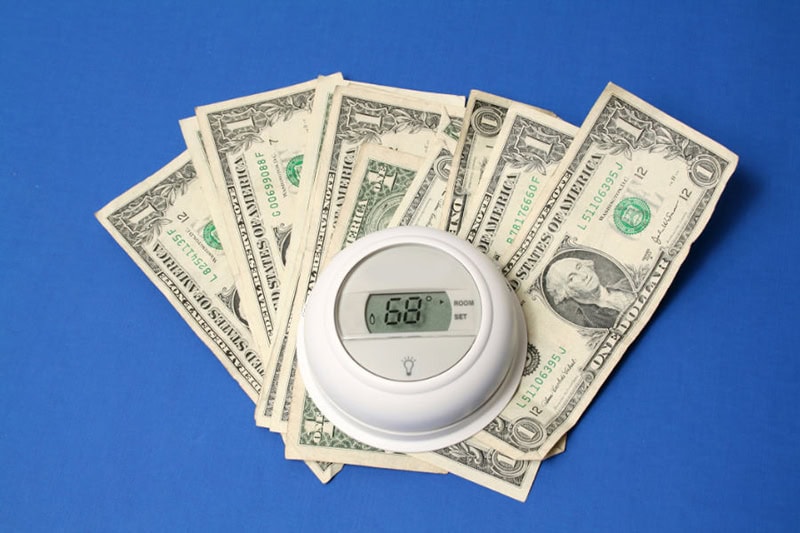
Zone control also enables you to heat or cool only occupied areas of your Clark County home. You can dial back the thermostat in sectors that are temporarily unoccupied or rarely used. By using a zoned comfort strategy, you only use energy when and where you need it. You waste less energy and save money on utility bills.
The U.S. Department of Energy (DOE) recommends using some heat in unused parts of your home, rather than shutting it off in those areas. It also advises that cooler sections of your home should be insulated and kept above 50° Fahrenheit to prevent pipes from freezing.
What Is a Typical Zone?
You can customize your zone control system to suit your home’s layout and heating and cooling needs. Here are a few typical configurations:
- By Floor: Each floor is a separate zone, which works well because heat rises.
- By Room: In larger homes, each room may be a zone.
- By Areas: In houses with open layouts, a kitchen and adjacent dining room might constitute a zone. You might also group bedrooms into a zone and create a family room zone.
- By Wings: Consider a sprawling home with family bedrooms in one wing, guest quarters in another, and common areas, such as the kitchen and living room, that separate the two wings. All three distinct areas might comprise separate zones.
One of our A-1 Mechanical technicians can assess your space and recommend the most effective zoning strategy for comfort and efficiency.
Best Candidates for Zone Control
Almost any home can benefit from zone control, but some spaces stand out:
- Multi-story homes where heat rises and cooling needs vary by level
- Homes with large, south-facing windows or sunrooms, which tend to overheat
- Rarely-used guest rooms or basements that need some climate control
- Open floor plans with inconsistent airflow
- Homes with hot and cold spots
How Long Does a Zone Control System Last?
With proper installation and regular maintenance, a zone control system can last 15 to 20 years. Its components are durable, but, as with any mechanical system, they can wear out or fail.
Common issues include dampers that stick open or closed, communication problems between the thermostats and control panel, and thermostat calibration errors.
Catching these early can prevent more significant problems and keep your system running smoothly. During an annual maintenance visit, one of our A-1 Mechanical technicians can test the dampers, calibrate the thermostats, inspect the zone control panel for errors, and ensure the system is running efficiently.
Schedule a Zone Control Consultation
Now you know the answer to the question, “What is the definition of zone control?” It’s a smart, energy-efficient way to customize comfort throughout your home. Whether you are building a new home or upgrading your existing HVAC system, A-1 Mechanical can install a zone control system that dramatically improves comfort in your Henderson, home while lowering energy costs. Call us at 702-363-6222 or request service online and schedule a consultation.